A Calm Bedtime Routine for Preschoolers (That Actually Sticks)
A simple, step-by-step bedtime routine for ages 3 to 5, with tips for the stalling, the extra glasses of water and the “one more book” negotiations.
 By Logan Duffield · · 3 min read
Every family’s evenings look a little different, but the bedtimes that go smoothly tend to have one thing in common: a routine that is simple, predictable and the same almost every night. Preschoolers love knowing what comes next. When they know, they don’t have to fight about it quite as much.
Here is a calm, flexible bedtime routine for children around three to five, plus a few ideas for the bumps along the way.
The routine in seven steps
Aim for about 30 to 45 minutes from the first step to lights out. Shorter is fine. What matters most is the order, not the clock.
- The wind-down signal. Pick one cue that means “bedtime is starting”: dimming the living room lights, a particular song, or a “five more minutes” warning. Use the same one every night.
- Bath or wash-up. Warm water is a nice transition, but a quick wash and pajamas work just as well on busy nights.
- Pajamas and teeth. Let your child make small choices here: which pajamas, which toothbrush song. Small choices reduce big battles.
- Last call. Bathroom and one sip of water, before stories. This simple step heads off a lot of the “but I’m thirsty” returns later.
- Books together. Agree on the number before you start (two is a classic) and let your child choose them. Reading is the heart of the routine, so give it your full attention.
- Connection time. A song, a cuddle, or a quick chat about the best part of the day. This is often when worries come out, so it is worth a few unhurried minutes.
- Lights out, same words every night. A short, predictable goodnight phrase (“Goodnight, sleep tight, I’ll see you in the morning light”) becomes a comforting signal that the day is done.
Choose stories that wind down
Not all books are equally sleepy. High-energy books are wonderful at 4 p.m., but the last book of the night should bring the energy down. Look for stories with a calm, cozy ending and a rhythm that slows as you read.
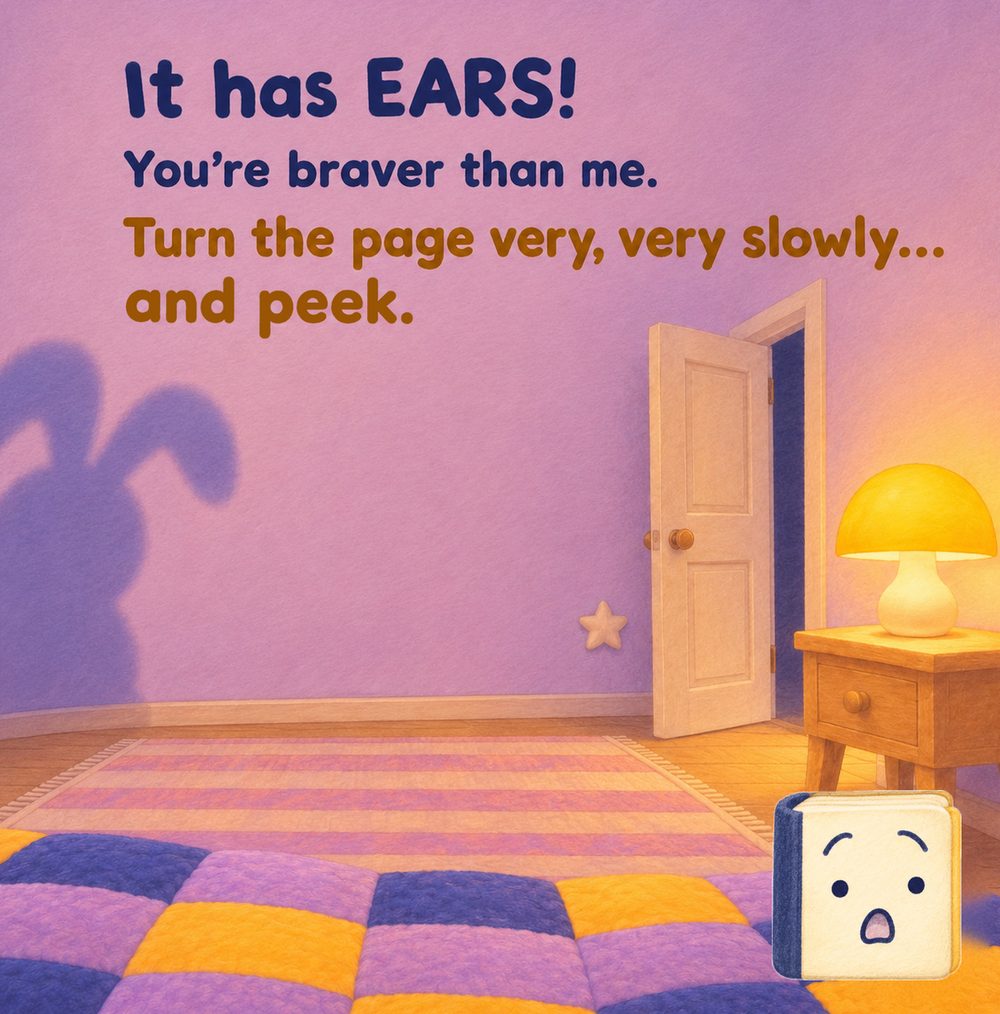
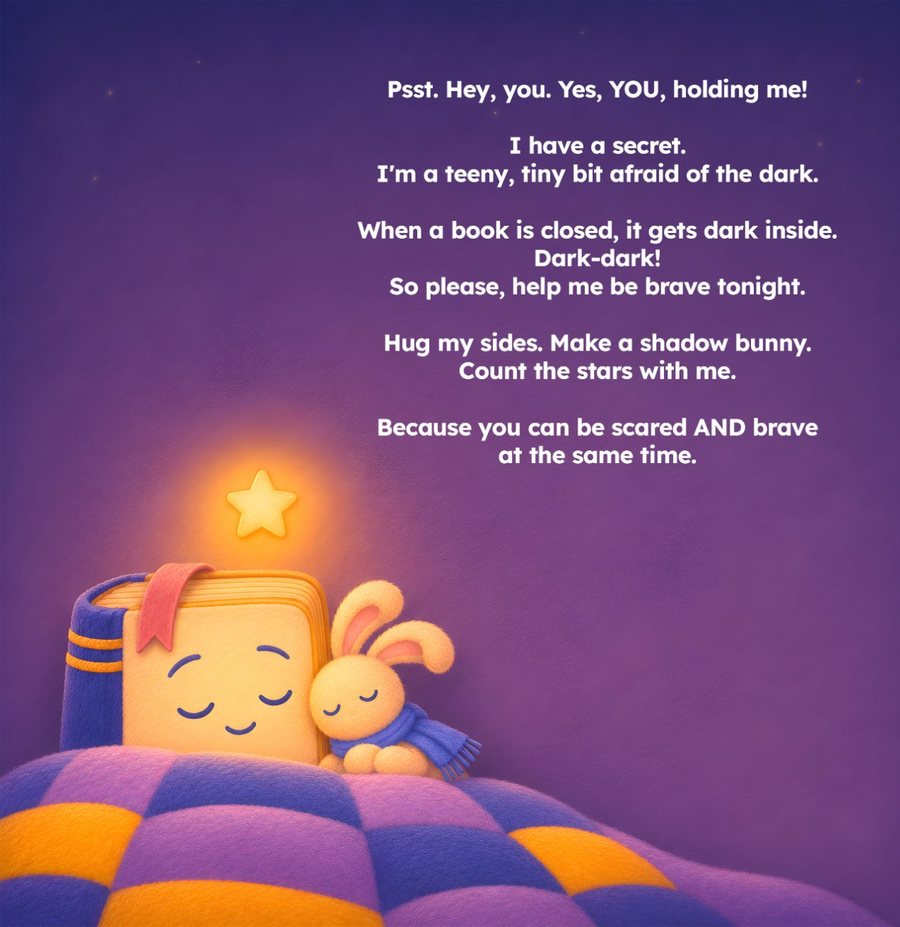
Interactive stories can be a great choice when they move from silly to soft. In The Book That Was Afraid of the Dark, kids start out shouting, tapping and making shadow bunnies, and end with slow breaths, counting stars and closing the book slooowly. The story itself does the winding down.
When things go off the rails
The stall. “One more book!” is a negotiation every parent knows. Deciding the number of books before you start, and letting your child pick which ones, gives them control over something while keeping the limit clear.
The returns. If your child keeps coming out of the room, a calm, boring walk back to bed with very few words works better over time than a long conversation. Save the chatting for connection time.
The worries. If bedtime brings fears, especially of the dark, try giving your child a calming “job” like balloon breaths or counting stars. We shared more ideas in How to Help a Child Who Is Afraid of the Dark.
The off nights. Travel, holidays and late dinners happen. Keep the last three steps (books, connection, same goodnight words) even when everything else changes. Those are the anchors.
Make the routine visible
Preschoolers love seeing their routine in pictures. Draw a simple chart together with one picture per step, or use a sticker chart to celebrate calm bedtimes. Our free Brave Night Kit includes a 7-night star chart and a certificate your child can earn at the end of the week. You can get it free below.
Quick tip: If you change something in the routine, change one thing at a time and give it a week. Kids need a few nights to learn a new pattern.