How to Help a Child Who Is Afraid of the Dark: 9 Gentle Ideas
Simple, kind ways to help a toddler or preschooler feel safe at lights-out, without saying “there’s nothing to be scared of.”
 By Logan Duffield · · 4 min read
If your little one suddenly needs every light on, checks under the bed twice and calls you back “just one more time,” you are in very good company. Being afraid of the dark is one of the most common fears of early childhood. It usually shows up somewhere between two and six, right when imaginations get big enough to invent monsters but not yet experienced enough to put them away again.
The good news: this fear tends to fade with time, and there is a lot you can do to make bedtime calmer in the meantime. Here are nine gentle ideas that work with your child’s imagination instead of against it.
1. Swap “there’s nothing to be afraid of” for “I hear you”
It is the first thing most of us say, and it rarely helps. To a child, the fear is real, so being told it isn’t can feel like not being listened to. Try naming the feeling instead:
“The dark feels scary to you tonight. I’m right here, and we can figure it out together.”
You are not agreeing that there is a monster. You are agreeing that the feeling is there, which is what lets it start to shrink.
2. Keep the routine boringly the same
Predictable feels safe. When the steps happen in the same order every night (bath, pajamas, teeth, two books, a song, lights out), your child’s brain knows exactly what comes next, and there are fewer surprises for worries to hide in. If you want ideas, we wrote a whole post on a calm bedtime routine for preschoolers.
3. Turn your child into the helper
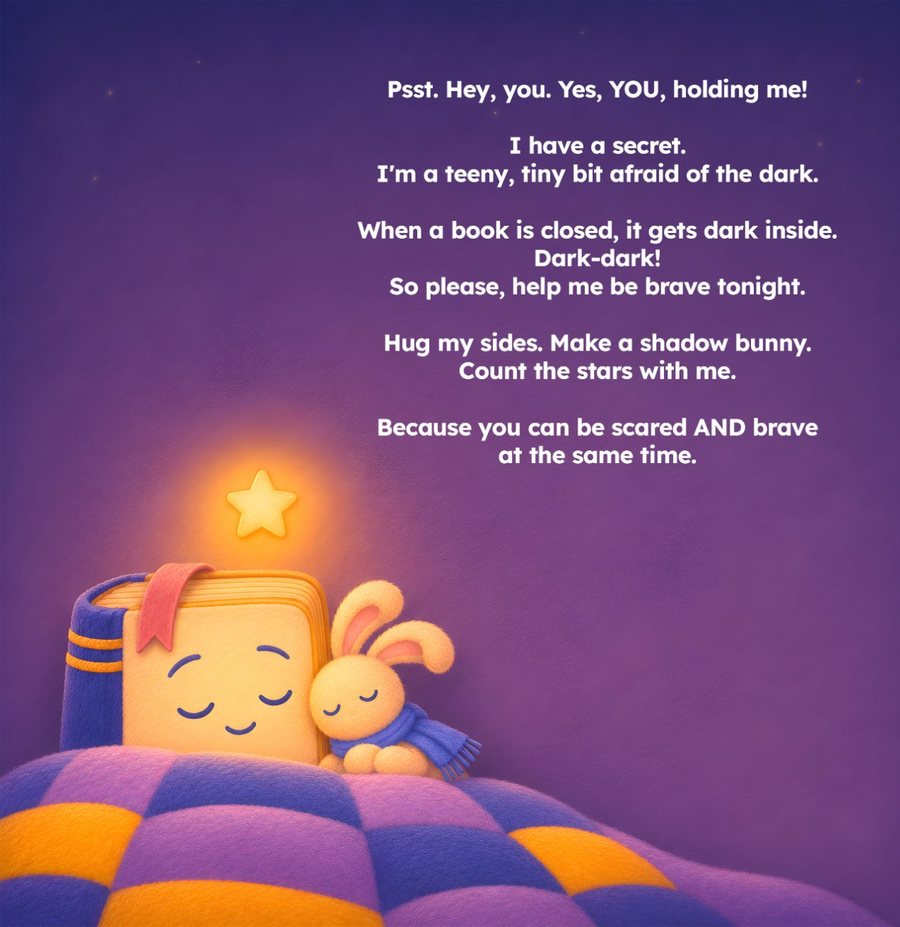
This is the idea behind The Book That Was Afraid of the Dark: instead of being the scared one, the child gets to be the brave helper. Kids often feel braver when they are taking care of someone else. A teddy who “needs” a hug, a younger sibling who “needs” the night-light checked, or a book that is a teeny bit scared of being closed all give your child a job, and a job is the opposite of helpless.
4. Make the shadows friendly
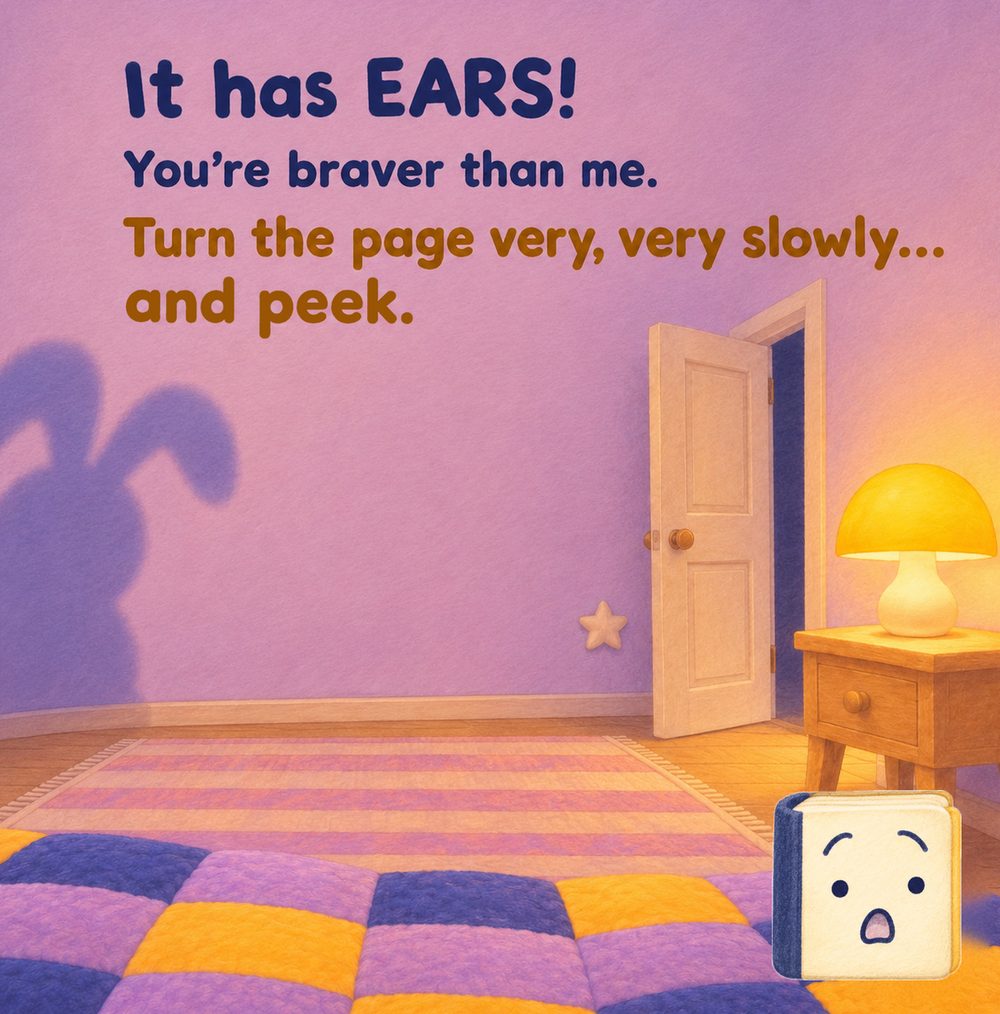
Shadows are one of the biggest culprits. Spend a few minutes before bed playing with a flashlight: make a shadow bunny on the wall, a bird, a puppy. When children make shadows themselves, the shapes on the wall become a game they control instead of a mystery. (The free Brave Night Kit at the bottom of this post includes a simple shadow animals guide.)
5. Go on a “goodnight tour”
Before lights out, walk around the room together and say goodnight to things: the door, the window, the closet, the lamp. It sounds silly, and that is the point. It gives your child a last look at a room where everything is exactly where it should be.
6. Name the noises
Old houses creak, heaters click, branches tap on windows. Unexplained sounds are scarier than explained ones. During the day or at bedtime, play “sound detective”: listen together and give each noise a name. “That’s the heater warming up. That’s the wind saying hello to the tree.”
7. Teach one calming trick, and practice it in the daytime
Slow “balloon breaths” are easy for little ones: breathe in through the nose and puff up the tummy like a balloon, then let the air out sloooowly. Counting stars to ten (real or imaginary) works too. Practice when everyone is calm, so the trick is ready when it is needed.
8. A night-light is not cheating
Brave does not have to mean pitch-dark. A small, warm night-light is a perfectly good tool, and many children happily give it up on their own later. If you use one, a dim, warm glow is usually more sleep-friendly than a bright white light.
9. Celebrate brave, not fearless
The goal is not a child who never feels scared. It is a child who learns they can feel scared and still do the thing. Notice small steps out loud: “You stayed in bed even though the wind was loud. That was brave.” A simple sticker chart can make those steps visible.
A message worth repeating: You can be scared AND brave at the same time. It is the big idea at the heart of our picture book, and it is a phrase kids can borrow on hard nights.
When to check in with your pediatrician
Most fear of the dark is a normal phase. It is worth talking to your child’s doctor if the fear suddenly gets much worse, lasts for many weeks, comes with other big changes in mood or behavior, or keeps your child (and you) from sleeping most nights.
A free printable to help
We made a free Brave Night Kit to go with this post: a 7-night star chart, a Brave Reader certificate, cut-out calm-down cards, shadow animals and a coloring page. Pop your email in below and it’s yours.